



The €50,000 Fleet Mistake Most Operators Notice Only After the Accident
One disputed accident can cost €10,000–50,000 in total business impact and drag on for months. With the right video evidence, fleets can move from uncertainty to clarity far faster.
VIDEO TELEMATICSFLEET SAFETYAI DASHCAM
3/28/20264 min read
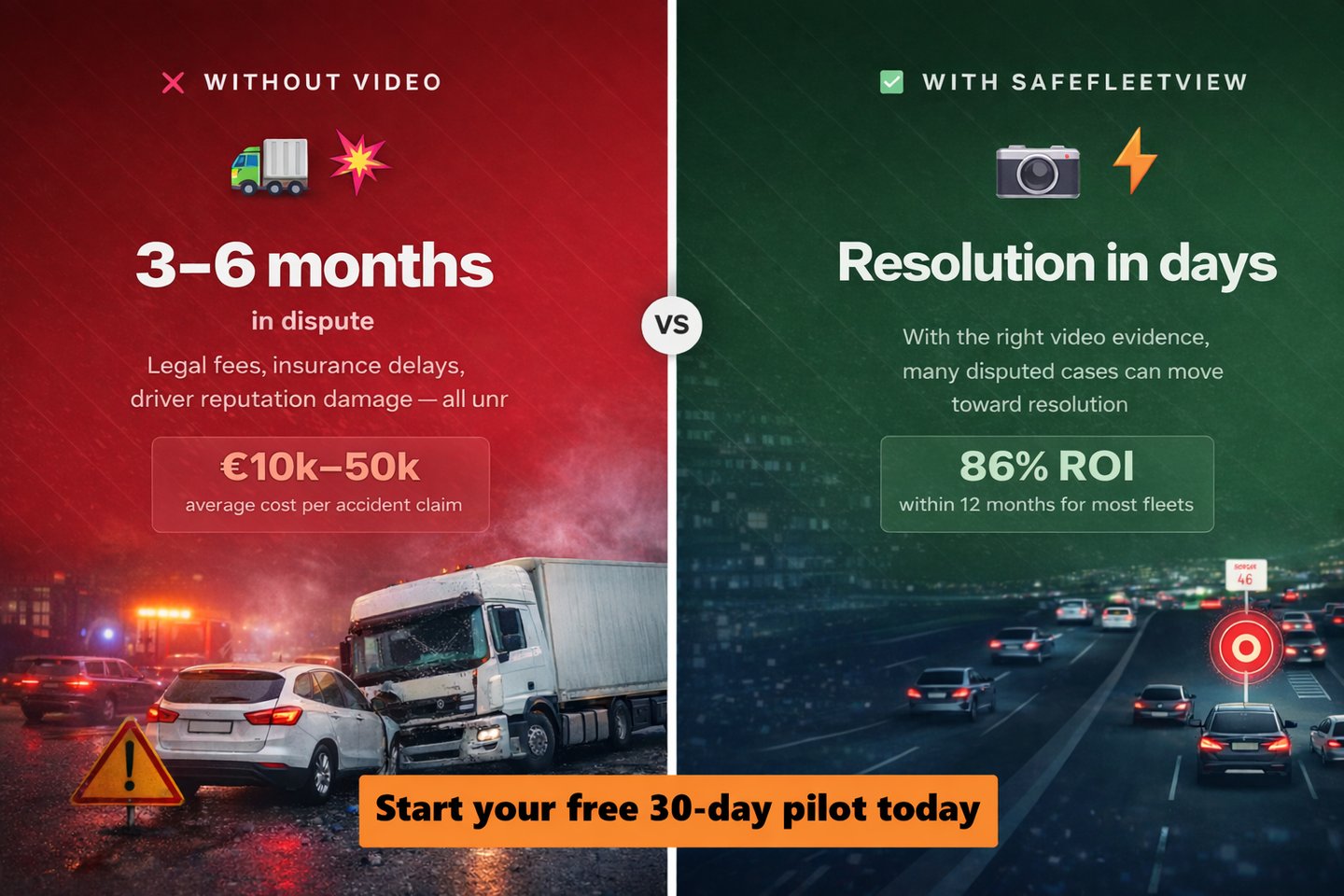
One disputed accident claim costs €10,000–50,000 and takes 3–6 months to resolve.
With the right video evidence, many disputed cases can move toward resolution in days instead of months.
A single disputed accident can grow into €10,000–50,000 in total business impact once you include vehicle downtime, admin time, legal cost, premium pressure, and damage to customer confidence.
Without clear evidence, cases can drag on for 3–6 months. With the right video evidence, many disputed cases can move from uncertainty to clarity in days instead of months.
Most fleet operators still evaluate dashcams as a hardware purchase.
That is the wrong question. The real question is this:
What will the next disputed incident cost your business if you have no video evidence?
Why the visible repair bill is only part of the cost
When a fleet vehicle is involved in an incident, the repair cost is only the beginning.
The larger cost usually comes from everything around it:
time spent reconstructing what happened
conflicting statements from drivers and third parties
delayed insurer decisions
vehicle off-road time
extra management and admin work
stress on the driver
possible legal involvement
premium impact and customer friction
A repair invoice may look manageable
But once an incident becomes disputed, the total impact often extends far beyond the workshop bill.
It can include:
vehicle downtime
management time
administrative burden
delayed insurer decisions
legal expense
customer friction
stress on the driver
reputational pressure on the business
For many operators, the biggest risk is not the accident itself. This is why relatively small incidents can become disproportionately expensive. A repair invoice may look manageable, but the total business impact can quickly multiply when the case remains unclear.
For fleet operators, the biggest risk is often not the accident itself. It is the lack of reliable evidence after the accident.
When there is no video, fleets often have to rely on partial information: driver memory, third-party statements, damage photos taken afterward, GPS data that shows location but not context. That usually leads to delay. And delay is expensive.
When there is clear event video, the conversation changes. Instead of arguing about what might have happened, operators, insurers, and managers can review what actually happened: what the driver could see, what happened before impact, whether another road user caused the event, whether coaching is needed, whether the claim should be challenged or accepted quickly
That speed matters.
Faster clarity means faster decisions.
Faster decisions mean less disruption.
Less disruption means lower total cost.


The difference between a manageable case and an expensive dispute
Why many fleets still postpone video adoption
Despite the business case, many fleets still delay deploying video telematics.
Usually, the reasons sound familiar:
“It is too expensive.”
This is often based on unit cost alone, not on the cost of one unresolved claim.
“We are not sure about GDPR.”
This is a valid concern, but modern event-based systems can support a more privacy-conscious deployment by reducing unnecessary recording, limiting stored footage, and defining how footage is accessed and managed.
“We have not had a serious problem yet.”
That may be true today. But fleet risk is not evaluated by the last quiet month. It is revealed by the next disputed incident.
A more practical way to evaluate video telematics
If you are assessing whether video telematics is worth it, do not start with the camera specification sheet.
Start with these questions:
How long does it currently take us to review a disputed incident?
How often do we rely on incomplete or conflicting accounts?
How much management time is lost per case?
How often are good drivers left exposed because there is no evidence?
What does one unresolved incident really cost us?
Those answers will usually tell you more than a hardware brochure ever will.
In practice, many fleets wait until after an expensive case to realize that video would have changed the outcome. That is the lesson many fleets learn too late.
A modern AI dashcam system is not just a camera recording for the sake of recording. Used properly, it becomes a decision tool.
It can help fleets:
retrieve the right event video faster
understand what happened before and after an incident
protect drivers against false or unclear claims
improve internal incident review
use real events for driver coaching
reduce repeat risky behaviour over time
That is why the value is operational, not only technical. The goal is not to collect more footage. The goal is to give the fleet team the right evidence at the moment it matters.
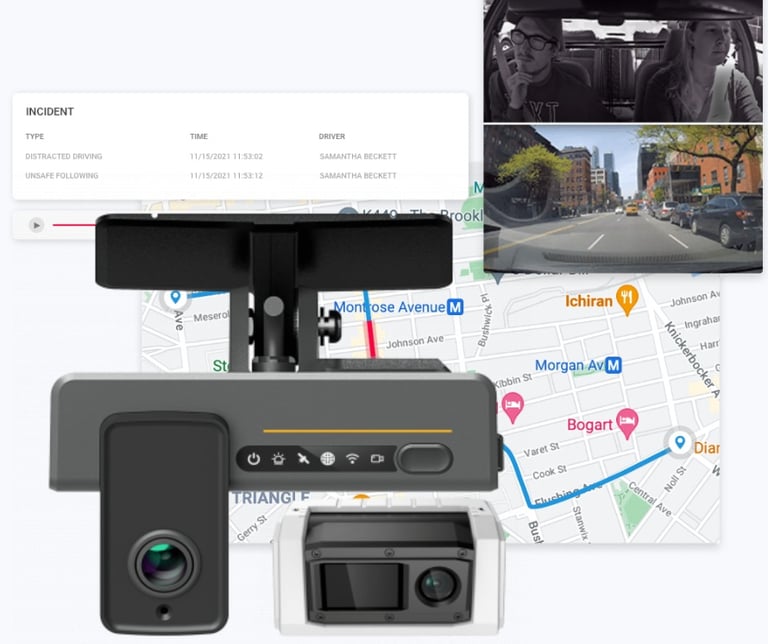
What event-based video changes
Why this matters financially
Many fleets still compare video systems only by:
hardware price
monthly subscription
installation time
But that comparison is too narrow.
A better comparison is:
cost of deployment versus
cost of one unclear incident
When you look at the issue that way, the discussion changes.
Why this matters operationally
The hidden cost of a disputed incident is not only financial.
It also affects:
driver morale
manager workload
customer relationships
insurer interactions
the speed of internal response
When cases stay open for weeks or months, they absorb attention that should be going into operations, safety improvement, and customer service.
A system that helps shorten disputes, reduce downtime, protect good drivers, and improve safety behavior is not simply another onboard device. It is part of risk control. For many fleets, one prevented or quickly resolved disputed case can justify a meaningful part of the investment.
That is why the best fleets are not only asking
“Did we capture the event?”
They are asking
“Can we act quickly and confidently once it happens?”
What one disputed incident can really cost
Even when a collision looks manageable, the total impact can expand quickly.
A disputed case may include:
repair cost
administrative time
vehicle downtime
delayed insurer decisions
legal expense
internal management burden
driver stress and reputation impact
customer friction
That is why fleets should not think only in terms of “camera cost.”
They should think in terms of avoidable business loss.
Few days
30–50%
~6 mo
Typical time for a disputed case to move toward clarity when the right video evidence is available
Potential reduction in preventable incidents after coaching and follow-up
Indicative hardware payback period for a typical 100-truck fleet
Start your free 30-day pilot today
Hardware included on up to 3 vehicles. No contract. Local installation. See your first AI alert within 48 hours.
The purpose is simple: Let your fleet see how much faster incident review becomes when the right video evidence is available. The most expensive fleet mistake is rarely the camera you did not buy.
GSR 2024 compliance assessment included · GDPR documentation supplied · Baltic & Nordic local support
AI-Powered Video Telematics for Safer, Smarter Fleets. Boost safety, reduce costs, and meet EU GSR compliance
Contact us
sales@ecotelematics.com
sales@safefleetview.eu
Finland, Turku +358 405189190
© 2026. All rights reserved.
Latvia, Riga +371 29125630
Lithuania, Palanga +370 63392200
Estonia, Tartu +372 5398 0890